Introduction?
Conflict is an inevitable part of life. Whether it arises within families, workplaces, businesses, communities, or between neighbours, disagreements are a natural consequence of human interaction. While conflict itself is not necessarily harmful, the way it is managed often determines whether relationships are strengthened or permanently damaged.
Many people assume that when disputes arise, the only option is to go to court. However, litigation can be expensive, time-consuming, emotionally draining, and adversarial. Fortunately, there is another approach—one that focuses on dialogue, cooperation, and mutually acceptable solutions. That approach is mediation.
Professional mediation has become one of the fastest-growing methods of Alternative Dispute Resolution (ADR) because it empowers parties to resolve disputes efficiently while preserving relationships wherever possible.
What Is Mediation?
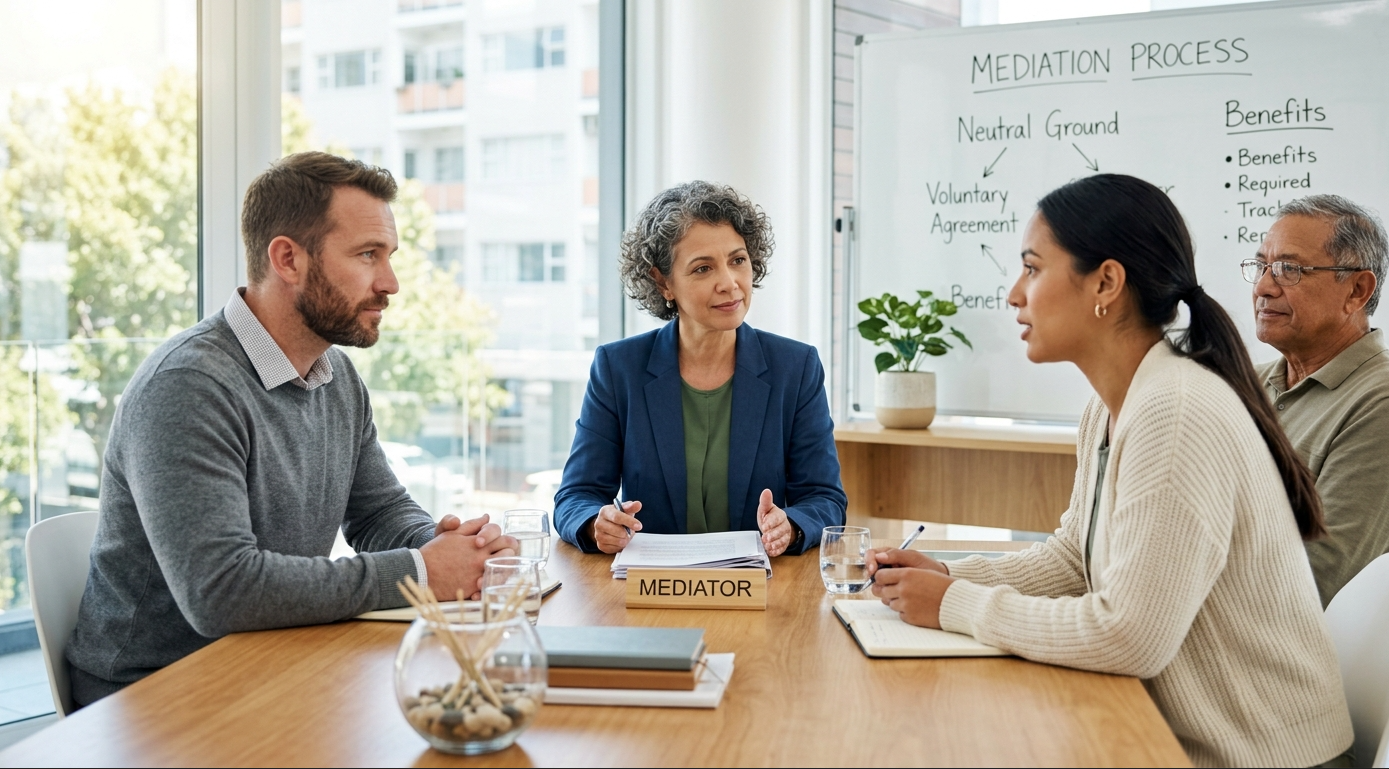
Mediation is a voluntary, confidential, and structured dispute resolution process in which an independent and impartial third party—the mediator—helps disputing parties communicate more effectively, identify the issues in dispute, explore their underlying interests, and negotiate a mutually acceptable agreement.
Unlike a judge or arbitrator, a mediator does not decide who is right or wrong. The mediator does not impose a decision or take sides. Instead, the mediator facilitates productive conversations and helps the parties develop their own solutions.
This principle of party self-determination is one of mediation's greatest strengths. The people directly affected by the dispute remain in control of both the process and the outcome.
Why Mediation Matters
Conflict often creates emotional tension, damages communication, and erodes trust. As disagreements escalate, parties may become entrenched in positions rather than focusing on their underlying interests.
Mediation provides a structured environment where parties can:
• Communicate openly and respectfully.
• Better understand each other's perspectives.
• Identify the real issues behind the conflict.
• Generate creative options for settlement.
• Reach agreements that meet the needs of everyone involved.
Rather than producing winners and losers, mediation seeks solutions that allow all parties to move forward with dignity.
• The Core Principles of Mediation
Professional mediation is guided by internationally recognised principles that safeguard the integrity of the process.
• Voluntary Participation
Participation in mediation is generally voluntary. Parties choose whether to participate and may decide whether to settle.
• Confidentiality
Discussions held during mediation remain confidential except where disclosure is required by law or agreed upon by the parties. This encourages honest and open communication.
• Neutrality
The mediator remains completely neutral and does not favour either party.
• Impartiality
Every participant receives equal respect, equal opportunity to speak, and equal consideration throughout the process.
• Party Self-Determination
The parties—not the mediator—make the final decisions regarding any agreement.
• Respect
Every individual deserves to be heard regardless of the nature of the dispute.
How Does the Mediation Process Work?
Although every dispute is unique, professional mediation generally follows several structured stages.
1. Initial Contact
The parties contact the mediator to discuss the dispute and determine whether mediation is appropriate.
2. Pre-Mediation Preparation
The mediator gathers background information, explains the mediation process, outlines confidentiality, and answers any questions.
3. Joint Mediation Session
The parties meet with the mediator in a safe and respectful environment. Each party has an opportunity to explain their concerns without interruption.
4. Issue Identification
The mediator helps identify the key issues requiring resolution.
5. Exploring Interests
Rather than focusing only on positions, the mediator helps uncover the interests, needs, concerns, and priorities underlying each party's position.
6. Generating Options
The parties work together to develop possible solutions that address their shared and individual interests.
7. Negotiation
The mediator facilitates constructive negotiations aimed at finding common ground.
8. Settlement Agreement
If agreement is reached, the terms are documented clearly for the parties' consideration and implementation.
Types of Disputes Suitable for Mediation
Mediation is remarkably versatile and can be used in many different contexts, including:
• Family Mediation
• Commercial & Business Mediation
• Employment & Workplace Mediation
• Civil & General Dispute Mediation
• Land & Property Dispute Resolution
• Community Mediation
• Inheritance & Succession Mediation
• Partnership & Shareholder Dispute Resolution
• Organisational Conflict Resolution
• Contract & Consumer Dispute Resolution
• Faith-Based & Church Mediation
• Organisational Conflict Resolution
• Online Mediation
• Conflict Coaching & Negotiation Support
• Mediation & Conflict Resolution Training
• Restorative Dialogue & Reconciliation
If the parties are willing to engage in dialogue, mediation can often provide an effective path toward resolution.
Benefits of Mediation
Choosing mediation offers numerous advantages over adversarial processes.
• Faster Resolution
Many disputes can be resolved in a fraction of the time required for litigation.
• Lower Costs
Mediation is generally more affordable than lengthy court proceedings.
• Greater Control
Unlike litigation, the parties themselves decide the outcome.
• Confidentiality
Sensitive matters remain private.
• Preservation of Relationships
Mediation encourages respectful communication, making it especially valuable where ongoing relationships are important.
• Flexible Solutions
Unlike court judgments, mediation allows parties to craft creative agreements tailored to their unique circumstances.
• Higher Satisfaction
Because parties participate directly in developing the agreement, they are often more satisfied with the outcome and more likely to honour it.
Is Mediation Legally Binding?
The mediation process itself is generally non-binding. However, once parties voluntarily sign a settlement agreement, that agreement may become legally enforceable depending on the applicable law and the way it is formalised.
For this reason, parties may choose to obtain independent legal advice before finalising an agreement.
Why Choose a Certified Professional Mediator?
A trained mediator brings far more than good communication skills.
A Certified Professional Mediator understands:
• Conflict dynamics
• Negotiation techniques
• Emotional intelligence
• Active listening
• Interest-based bargaining
• Communication strategies
• Mediation ethics
• Agreement drafting
• Managing difficult conversations
These specialized skills help create a safe environment where productive dialogue can flourish.
Mediation Is About Building Better Futures
Perhaps the greatest strength of mediation is that it looks beyond the dispute itself.
Instead of dwelling solely on the past, mediation helps parties focus on rebuilding communication, restoring trust where possible, preserving valuable relationships, and creating practical solutions for the future.
Whether the dispute involves family members, business partners, colleagues, neighbours, or organisations, mediation offers an opportunity to resolve differences respectfully while minimising emotional and financial costs.
Conclusion
Conflict is inevitable, but destructive conflict is not.
Professional mediation provides individuals, families, businesses, and communities with an opportunity to resolve disputes through dialogue rather than confrontation. By promoting understanding, collaboration, and informed decision-making, mediation helps parties reach practical, durable agreements while preserving dignity and respect.
If you are facing a dispute and would like to explore a confidential, impartial, and professional approach to resolving it, mediation may be the right solution.
Ready to Resolve Your Dispute?
If you are seeking a confidential, impartial, and professional mediation service,
Geoffrey Musera, CPM – Certified Professional Mediator | Conflict Resolution Practitioner, is committed to helping you navigate conflict with confidence and dignity.
Contact today to schedule a confidential consultation and take the first step toward a practical and lasting resolution.
About the Author
Geoffrey Musera, CPM, is a Certified Professional Mediator and Conflict Resolution Practitioner with over ten years of experience in conflict resolution and Alternative Dispute Resolution (ADR). He assists individuals, families, businesses, organisations, and communities in resolving disputes through ethical, confidential, and client-centred mediation.